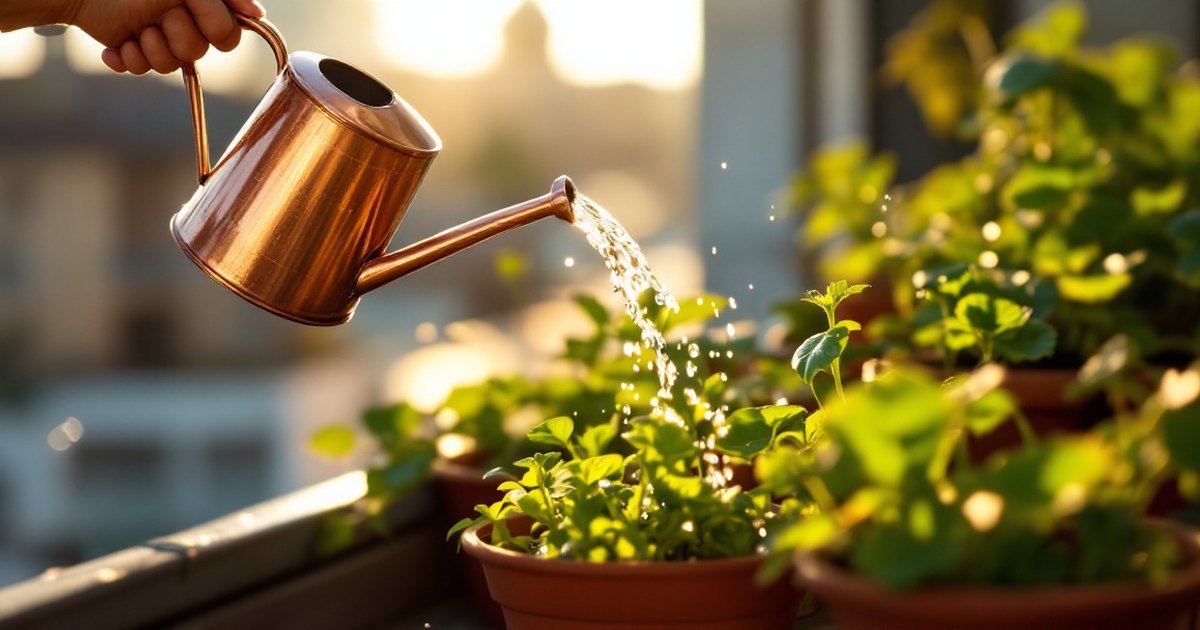
You stand on your balcony, watering can in hand, wondering if your tomatoes need a drink today or if you will drown them again. The truth is, watering container vegetables is the single most common reason plants thrive or die on a balcony, and getting it right changes with every season and every pot you use.
The short answer: you water when the top inch of soil is dry, not on a fixed schedule. In summer, that might mean daily for small pots in full sun; in spring, it could be every 4 days. The type of container changes everything—a fabric pot dries out twice as fast as a glazed ceramic one. Your best tool is your finger, not a calendar.
Why Container Watering Is Different (And Harder)
Container plants live in a closed system with no deep ground to tap for moisture. All their water comes from you. The soil volume is limited, so it heats up and dries out faster than garden soil, especially when the sun reflects off building walls and railings. A plant on a south-facing balcony in July can experience desert-like conditions by midday.
Unlike in-ground gardening, where a deep weekly soak might suffice, containers need more frequent, attentive watering. The roots cannot spread out to find water; they are entirely dependent on the moisture in that pot. This makes them vulnerable to both drought and drowning. Overwatering is just as deadly as underwatering because it suffocates roots and leads to rot.
Balcony gardeners also face microclimates. A windy corner will dry pots faster than a sheltered one. A metal railing planter heats up more than a plastic pot on the floor. Understanding these factors is the first step to mastering watering. For a deeper look at setting up a system that works, see our guide on watering container vegetables with schedules and systems.
The Finger Test: Your Best Watering Tool
Forget guessing. The most reliable method is the finger test. Insert your index finger into the soil up to the first knuckle (about an inch deep). If the soil feels dry at that depth, it is time to water. If it feels moist or cool, wait another day and check again. This method accounts for daily changes in temperature, humidity, and wind.
Moisture meters can be helpful tools, but they are not essential. A basic soil moisture meter can give you a numerical reading, which is useful if you are unsure. However, your finger is free and just as accurate for the top inch of soil where most container roots live.
Learn the weight of your pots. A pot that needs water is noticeably lighter than a freshly watered one. Lift them before and after watering to get a sense of the difference. This is a quick way to check without getting your hands dirty every time.
Signs You Are Underwatering
The leaves wilt, often looking droopy and sad, especially during the hottest part of the day. If the plant does not perk up after watering, the damage might be severe. The soil will pull away from the sides of the pot, and growth will slow or stop completely.
Signs You Are Overwatering
The leaves may wilt but feel soft and limp, not dry and crispy. The soil surface might show green algae or mold growth. The most telling sign is a foul, sour smell from the soil, indicating root rot. For a full breakdown, read Overwatering vs Underwatering: Reading the Signs.
How Pot Material Changes Watering Frequency
The container you choose is not just about looks; it directly determines how often you will be watering. Different materials breathe and retain heat differently, which drastically affects moisture evaporation.
Plastic Pots
Standard plastic pots (like nursery pots) are lightweight and inexpensive. They retain moisture well because they are non-porous. This means you might water less frequently than with breathable pots, but you must be extra careful not to overwater. They are a good choice for water-loving plants like lettuce or for gardeners who tend to underwater.
Fabric Pots (Grow Bags)
Fabric pots are made of breathable geotextile. They promote “air pruning” of roots, which prevents circling and creates a healthier root system. The trade-off is that they dry out very quickly. In hot, sunny weather, a 5-gallon fabric pot may need watering once, sometimes even twice, a day. They are excellent for heat-loving plants like tomatoes and peppers that hate “wet feet,” but they demand consistent attention.
Terracotta and Unglazed Ceramic
These classic pots are porous, allowing water to evaporate through the sides. They can dry out almost as fast as fabric pots, especially in wind. A terracotta pot on a sunny balcony is a commitment to frequent watering. They are beautiful but best suited for drought-tolerant herbs like rosemary or thyme, not thirsty vegetables.
Glazed Ceramic, Metal, and Wood
Glazed ceramic and metal pots are non-porous like plastic, so they retain moisture longer. However, dark-colored metal pots can heat up significantly in the sun, baking the soil and roots inside. Wooden planters fall in the middle—they breathe but not as much as fabric. They are a good middle-ground option for most balcony vegetables.
| Pot Type (5-Gallon Size) | Water Retention | Estimated Summer Watering Frequency* | Best For |
|---|---|---|---|
| Plastic | High | Every 2-3 days | Beginners, leafy greens |
| Fabric (Grow Bag) | Very Low | 1-2 times daily | Tomatoes, peppers (experienced) |
| Terracotta | Low | Every 1-2 days | Herbs (rosemary, oregano) |
| Glazed Ceramic | High | Every 3-4 days | Most vegetables, decorative |
Watering by Season: Spring, Summer, and Fall
Your watering routine must change with the seasons. The same plant in the same pot will have drastically different needs in cool spring weather versus the peak of summer heat.
Spring (After Last Frost)
In spring, temperatures are cooler, days are shorter, and plants are still small. Evaporation is slow. You might only need to water every 4-5 days. Always check with the finger test. The danger in spring is overwatering, as young plants do not yet have large root systems to use the water quickly. Be conservative.
Summer (Peak Heat)
This is the most demanding season. Long, hot days and intense sun can dry out a container in hours. Large, fruiting plants like tomatoes and zucchini are drinking heavily. You will likely water every day, and for small pots or fabric pots, you might water in the morning and check again in the evening. Water deeply in the morning so plants are hydrated before the heat hits.
If your balcony gets brutal afternoon sun, consider providing shade with a shade sail or moving pots slightly out of the direct sun during the hottest part of the day. This can reduce water stress significantly.
Fall (Cooling Down)
As temperatures drop and daylight shortens, plant growth slows and water use decreases. You will gradually scale back watering frequency to every 3-5 days again. Pay attention to rain; a fall shower might mean you skip a watering cycle altogether. Stop fertilizing to help plants harden off for the end of the season.
Watering Specific Vegetable Types
Not all vegetables drink the same amount. Grouping plants with similar needs together makes watering much easier.
Heavy Drinkers (Water Frequently)
These plants have large leaves or fruit and need consistently moist soil. They wilt dramatically when thirsty.
- Tomatoes & Peppers: Keep soil evenly moist, especially when fruiting. Inconsistent watering causes blossom end rot.
- Cucumbers & Zucchini: These are mostly water! They need deep, frequent watering to produce well.
- Lettuce & Greens: Shallow roots mean they dry out fast. They bolt (go to seed) if stressed by drought.
Moderate Drinkers (Let Soil Dry Slightly)
These prefer the soil to dry out a bit between waterings.
- Beans & Peas: Water well when flowering and producing pods, but allow the top inch to dry otherwise.
- Root Vegetables (Carrots, Radishes): Consistent moisture is key, but soggy soil causes rot and split roots.
Light Drinkers (Let Soil Dry Out)
These plants are adapted to drier conditions and are easily killed by overwatering.
- Herbs (Rosemary, Thyme, Oregano): Let the soil dry completely between thorough waterings.
- Hot Weather Herbs (Basil): While it loves heat, let the top inch dry out to prevent stem rot.
Automating Your Watering for Consistency
Life gets busy. Vacation happens. Automating your watering is the best way to ensure your plants get consistent moisture even when you are not there.
The simplest upgrade is a DIY self-watering planter. These use a reservoir to wick water up into the soil as needed, buying you several days between refills. They are fantastic for moderate drinkers like greens and herbs.
For a larger balcony setup, a drip irrigation kit for balconies is a game-changer. A system like the Rain Bird Drip Irrigation Kit can be connected to a timer and your faucet, delivering a precise amount of water to each pot at a set time every day. This is the ultimate solution for peace of mind during heatwaves or trips away. For vacation plans, see how to water while you are on vacation.
Key takeaways
- Check soil moisture with the finger test—water when the top inch is dry.
- Pot material is critical: fabric pots need daily summer water, glazed ceramic needs it every 3-4 days.
- Season dictates frequency: water daily in summer, every 4-5 days in spring/fall.
- Group plants by water needs (thirsty tomatoes vs. drought-tolerant herbs) to make watering easier.
- Use self-watering pots or a drip system to automate and prevent stress during heat or vacation.
Frequently asked questions
Should I water my container vegetables in the morning or evening?
Water in the morning. This allows leaves to dry before nightfall, reducing the risk of fungal diseases, and ensures plants are fully hydrated before the day’s heat. Evening watering can leave plants damp overnight, which promotes mildew.
How much water should I give each time?
Water until it runs freely out of the drainage holes. This ensures the entire root ball is moistened. A shallow sprinkle only wets the top and encourages weak, surface roots. For a 5-gallon pot, this usually means ½ to 1 gallon of water.
Do I need to water on rainy days?
Probably not. Check your pots—often, a balcony overhang or railing protects containers from rain. If the soil is dry an inch down, water. If it’s wet from rain, skip it. Overwatering is a bigger risk on rainy, cloudy days when evaporation is slow.
Why does water sometimes run straight through the pot without soaking in?
This is called hydrophobic soil. It happens when peat-based potting mix dries out completely. The soil repels water. To fix it, water slowly for several minutes, or submerge the entire pot in a bucket of water for 10 minutes to rehydrate the soil completely.
Mastering watering is the first step to a productive balcony garden. For more guides on keeping your plants perfectly hydrated, explore all our articles in the Watering category.