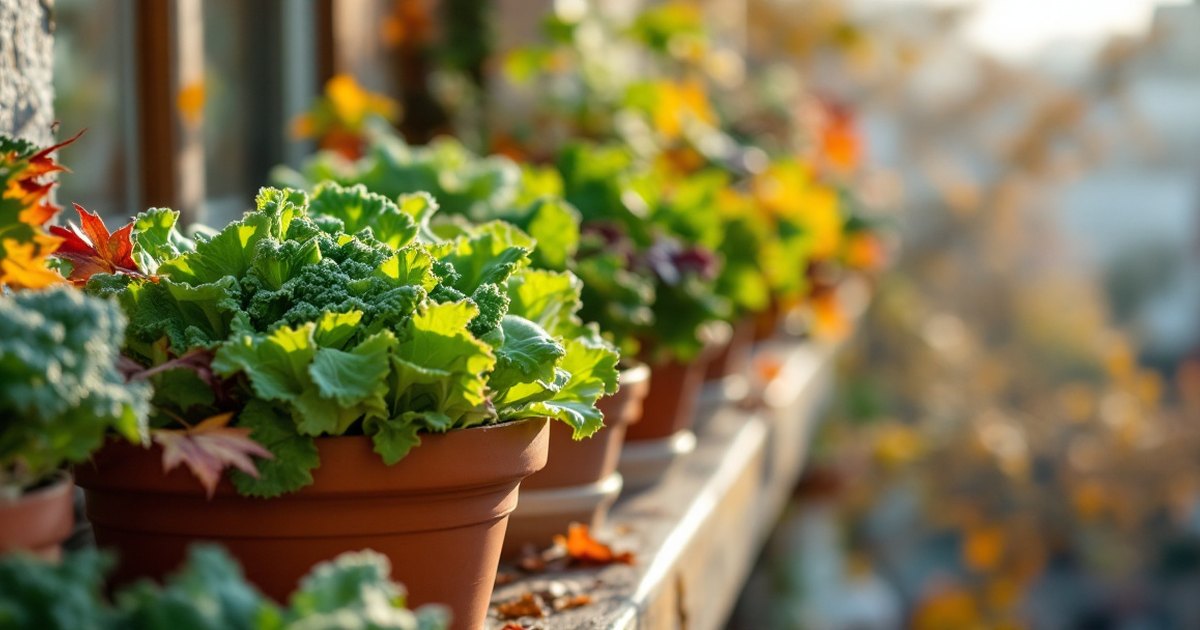
Why Fall Container Gardening Works on a Balcony
You look at your balcony as summer winds down and see empty pots where your tomatoes once thrived. The space feels wasted, but you’re not sure what can survive the coming chill and shorter days. The good news is that fall is not an ending—it’s a second, often easier, planting season. Cool weather eliminates many pests and diseases that plague summer crops, and plants like kale and carrots actually taste better after a light frost.
The short answer: you can plant a robust container garden for fall right now. Focus on cool-season vegetables that thrive in the 55°F to 75°F (13°C to 24°C) range, including leafy greens, root vegetables, brassicas, and some hardy herbs. Your key to success is working backwards from your first expected frost date to ensure plants have enough time to mature. For most regions, planting in late summer for a fall harvest is the perfect strategy to maximize your balcony’s productivity. You can extend your growing season by weeks or even months with the right plant choices and a little protection.
Timing Your Fall Container Garden Perfectly
The most critical step in fall gardening is nailing the timing. Unlike spring, when you wait for the soil to warm up, fall planting is a race against the cooling temperatures and dwindling daylight. The single most important date to know is your average first fall frost date. This is not a hard deadline for death, but a turning point where growth slows dramatically for most plants.
To find your date, search online for “[your city] first frost date” or use a resource from your local university extension service. Once you have that date, pull out your seed packets. Each one lists “days to maturity.” For fall planting, you need to use a different calculation: Days to Maturity + 14-Day Fall Factor = Total Days Needed. The extra two weeks account for the fact that plants grow more slowly in fall’s shorter, cooler days than they do in the long, warm days of spring. Count backwards from your first frost date by the total days needed. That gives you your absolute last planting date. For a safety buffer, aim to plant one to two weeks before that calculated date.
Working with Seedlings vs. Seeds
For the fastest harvest, start with seedlings from a garden center. This gives you a head start of 4-6 weeks, which is often the difference between a full harvest and plants that get cut short by frost. Look for sturdy, compact plants, not ones that are already leggy or flowering. For crops that hate having their roots disturbed, like carrots and peas, you must direct-sow seeds into their final container. This means you need to plan even further in advance to accommodate their full growth cycle from seed.
The Best Vegetables for Your Fall Containers
Your plant choices are the foundation of your success. Cool-season crops are genetically programmed to thrive in the conditions autumn provides. They can handle light frosts and many will hold in containers for weeks, giving you a long harvest window from a single planting.
Leafy Greens: The Workhorses of Fall
No category is more productive or forgiving than leafy greens. They grow quickly and many can be harvested as “cut-and-come-again” crops, meaning you snip outer leaves and the plant keeps producing from the center. For kale, choose dwarf varieties like Dwarf Blue Curled Vates or Lacinato (also called Dinosaur kale), which need a 2-gallon pot per plant. Swiss Chard, particularly the bright Bright Lights cultivar, is remarkably frost-tolerant and adds stunning color; give it a 3-gallon pot. Lettuce is a must-grow; loose-leaf varieties like Black Seeded Simpson or Oakleaf mature in just 45-50 days and can be grown in a shallow 6-inch deep window box, spaced 6 inches apart.
Root Vegetables: Sweetened by the Cold
Root crops are a fantastic fall choice because the cool temperatures convert their starches into sugars, making them incredibly sweet. Radishes are the speed demons of the garden, with varieties like Cherry Belle ready to harvest in just 25 days. They can be planted in a pot as shallow as 8 inches. For carrots, select short or round varieties suited to containers, such as Parisian Market (round) or Little Finger (short and slender). They need a deep pot—at least 12 inches—with loose, stone-free potting mix to form perfect roots. Beets can also be grown for both their tasty roots and their nutritious greens; Detroit Dark Red is a reliable choice for a 2-gallon pot.
The Brassica Family: Hardy and Nutritious
This family includes some of the most cold-hardy vegetables you can grow. Broccoli is a great choice, but for containers, focus on hybrid varieties that produce a large central head followed by abundant side shoots, like Green Goliath. It requires a large container, at least 5 gallons for one plant. Asian greens are arguably the best balcony brassicas. Bok Choy (or Pak Choi) grows rapidly and can be harvested as baby greens or full heads; a 2-gallon pot supports one full-size plant. Tatsoi forms beautiful rosettes that are extremely cold-tolerant and perfect for small spaces.
Choosing and Preparing Your Containers
The right container is a life-support system for your plants. In fall, material and size become even more important as temperatures fluctuate. Fabric pots, like the popular 5 Gallon Fabric Grow Bags, are excellent for fall gardening. They provide superior air pruning for healthy roots and offer better insulation against temperature swings than rigid plastic or ceramic, which can overheat on a sunny day and freeze quickly on a cold night.
Size is non-negotiable. A too-small pot will freeze solid faster and stunt plant growth. Refer to the specific pot size recommendations for each vegetable. Always ensure your containers have adequate drainage holes. Soggy soil is a death sentence in cool weather, as roots are more susceptible to rot. If you’re reusing pots from summer, scrub them with a solution of one part bleach to nine parts water to kill any lingering disease pathogens.
Your soil is just as important. Do not reuse the spent potting mix from your summer tomatoes or peppers; it is depleted of nutrients and may harbor diseases. Start fresh with a high-quality potting mix, not garden soil. A product like Espoma Organic Potting Mix is a reliable choice. For heavy feeders like kale and broccoli, you can mix in a slow-release organic fertilizer, such as Espoma Plant Tone, at the time of planting to provide nutrients throughout the season.
Balcony Placement and Maximizing Limited Light
Sunlight is your most limited resource in fall. The sun sits lower in the sky, and days are shorter. Track how many hours of direct sun your balcony receives now, not in June. Most fall vegetables need a minimum of 4-6 hours of direct sun to produce a good harvest.
Position your containers to capture every minute of available light. South-facing balconies are ideal. On east-facing balconies, you get strong morning sun. West-facing balconies get hotter afternoon sun. North-facing balconies are the most challenging, receiving only indirect light; focus on leafy greens like lettuce and spinach here, as they have the lowest light requirements. Don’t be afraid to move lighter-weight containers around during the week to chase the sun if your space allows.
As the season progresses, be aware of new shadows cast by buildings as the sun’s angle changes. A spot that was sunny in September might be in shade by late October. You can use reflective surfaces to your advantage. Placing a white board or a sheet of aluminum foil behind your plants can bounce available light back onto them, boosting their energy intake without any cost.
Protecting Your Garden from Early Frosts
A light frost (28°F to 32°F / -2°C to 0°C) doesn’t have to be the end. With simple protection, you can keep your plants producing for weeks longer. The goal is to trap the heat radiating from the soil overnight.
The simplest method is to cover your plants. Use breathable fabrics like burlap, row cover (Garden Fleece Row Cover), or even an old bedsheet. Drape the material over your containers before nightfall and secure it so it doesn’t blow away. Crucially, ensure the cover extends all the way to the ground to trap soil heat. Remove the cover the next morning once temperatures rise above freezing to allow light and air circulation.
For a more structured solution, create a mini hoop house. Push flexible PVC pipes or metal stakes into the pot’s soil to form arches over the plants. Drape your row cover over the hoops, creating a small greenhouse. This provides better insulation and protects the plants from the weight of the cover. On very cold nights, you can also group containers together against the wall of your building, which retains some heat. For a detailed guide on pushing your harvest even further, see our article on Winter Balcony Gardening: What Survives the Cold in Pots.
Fall Container Gardening Quick-Reference Table
| Vegetable | Recommended Varieties | Minimum Pot Size | Days to Maturity | Cold Tolerance |
|---|---|---|---|---|
| Kale | Dwarf Blue Curled, Lacinato | 2 gallons | 55-65 days | Very Hardy (survives hard frost) |
| Lettuce (Leaf) | Black Seeded Simpson, Oakleaf | 6″ deep planter | 45-50 days | Moderate (needs protection) |
| Radishes | Cherry Belle, French Breakfast | 8″ deep pot | 25-30 days | Moderate (light frost OK) |
| Carrots | Parisian Market, Little Finger | 12″ deep pot | 55-70 days | Hardy (sweetens with frost) |
| Bok Choy | Baby Choi, Shanghai Green | 2 gallons | 45 days (baby), 60 days (full) | Moderate (light frost OK) |
| Spinach | Bloomsdale Long Standing | 1-2 gallons | 40-45 days | Very Hardy (survives hard frost) |
Key takeaways
- Time your planting by counting backwards from your first frost date (Days to Maturity + 14 days).
- Choose the right cold-hardy crops: focus on leafy greens, root vegetables, and compact brassicas.
- Use appropriately sized containers with fresh potting mix and ensure they have excellent drainage.
- Maximize limited fall light by positioning pots strategically and using reflective surfaces.
- Protect plants from early frosts with simple covers like row cover or cloths to extend the harvest.
Frequently asked questions
When is it too late to plant a fall container garden?
It is too late when you cannot count back 6-8 weeks from your first frost date. This is the absolute minimum time needed for the fastest-growing greens like lettuce and radishes to reach maturity. For slower-growing crops like carrots or broccoli, you needed to plant much earlier, in mid-to-late summer. If you’ve missed the window, you can focus on overwintering herbs indoors or preparing your pots for early spring planting.
Can I use the same soil from my summer containers?
It is not recommended. Summer crops deplete the soil of nutrients and the mix can harbor diseases that might affect your new, tender fall seedlings. Start with a fresh, high-quality potting mix to give your fall plants the best possible start and avoid introducing problems. You can compost your old potting mix or spread it on a non-edible garden bed.
How often should I water my fall containers?
Watering needs decrease significantly in fall due to cooler temperatures and slower plant growth. Check soil moisture by sticking your finger 1-2 inches into the soil. Water only when it feels dry at that depth. Overwatering is a major risk in cool, damp weather and can quickly lead to root rot. Early morning is the best time to water, allowing leaves to dry before nightfall.
What if my balcony doesn’t get much sun?
Focus on the crops with the lowest light requirements. Leafy greens like spinach, lettuce, and some Asian greens (Tatsoi, Mizuna) can tolerate 3-4 hours of sun or bright indirect light. You can also use a LED Grow Light Bulb in a regular lamp fixture to supplement natural light for a few hours each day, especially if you have a covered balcony.
Fall container gardening is one of the most rewarding seasons for a balcony grower. The crisp air, the lack of bugs, and the sweet taste of frost-kissed greens make it truly special. For more ideas on what to plant in every season, explore our complete guide to Balcony Gardening Through the Year and start planning your next harvest today.