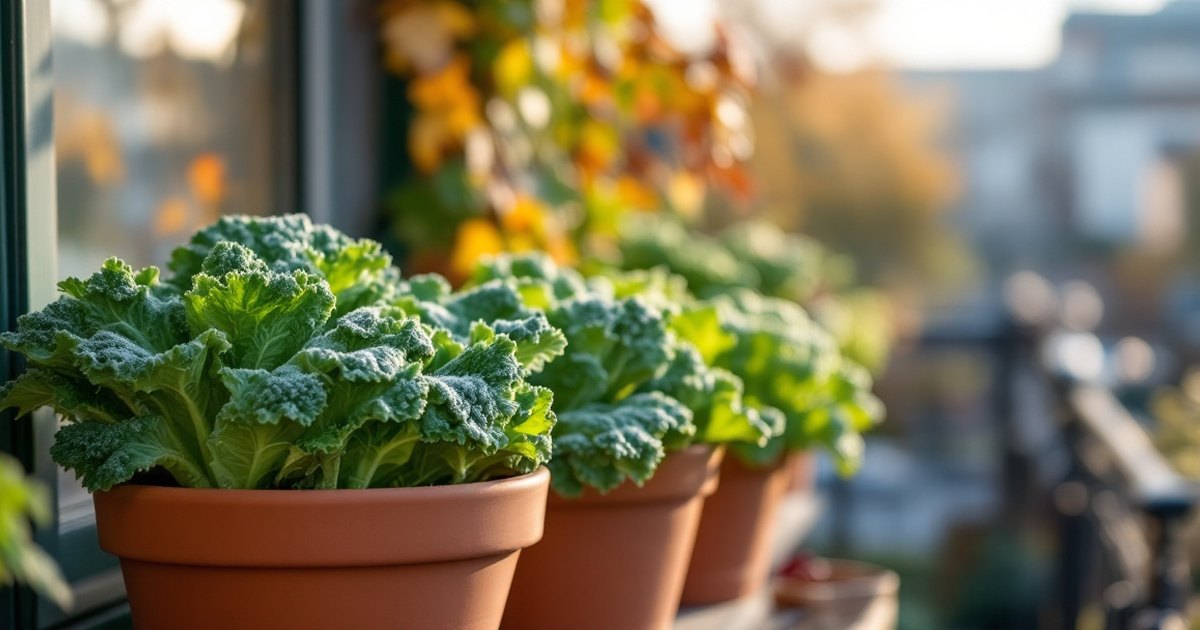
Your Balcony Isn’t Dead in Winter
You look out at your balcony in November and see empty pots, a few dead stems, and the sad remains of summer’s glory. You assume that’s it until spring, that growing food on a balcony is a warm-weather hobby. But your cold, windy, often-shady balcony space is not a lost cause for months on end. A surprising number of edible plants not only survive winter in containers but actively thrive in the cold, giving you fresh harvests when you need them most.
The Short Answer: What Actually Grows
Your winter balcony garden will be built on hardy leafy greens, robust roots, and perennial herbs. Focus on crops like kale, spinach, Swiss chard, carrots, radishes, and parsley. These plants are genetically programmed to handle frost and even taste sweeter after a cold snap. Your key to success is less about heat and more about protecting them from the worst of the winter wind and ensuring they get every possible minute of weak winter sun. You can have a productive space from October through March with the right plant choices and a few simple tactics.
Why Winter Container Gardening Works
It seems counterintuitive to grow plants in pots on a exposed balcony when the ground is freezing, but containers offer unique advantages for winter gardening. Unlike in-ground gardens that can become waterlogged and frozen solid, you have complete control over the soil in your pots. You can move them to catch sun, shield them from harsh winds, and provide perfect drainage to prevent root rot. This mobility and control are your biggest assets.
Furthermore, many cool-season crops are naturally hardy. They don’t need heat; in fact, heat is their enemy, causing them to bolt (go to seed prematurely). They prefer the cool, moist conditions of fall and winter. A light frost triggers these plants to convert their starches into sugars as a natural antifreeze, which makes leaves like kale and spinach taste significantly sweeter and less bitter than their summer-grown counterparts.
The goal isn’t explosive growth—that happens in spring and summer. The winter goal is steady, slow production and preservation of the plants you already have. You’re harvesting smaller leaves more frequently, and in many cases, you’re simply keeping plants alive and healthy so they explode with growth at the first sign of spring warmth. It’s a different rhythm, but a deeply satisfying one.
The Best Crops for Your Winter Balcony
Your plant selection is the most critical factor for winter success. Forget tomatoes and peppers; they will die at the first frost. Instead, build your winter garden from this list of reliable performers.
Hardy Leafy Greens: The Workhorses
These are the backbone of your winter harvest, providing continuous cuts of fresh greens for salads, stir-fries, and smoothies.
Kale: The king of winter greens. Varieties like ‘Winterbor’ (curly) and ‘Red Russian’ (flat) are exceptionally cold-tolerant, surviving temperatures down to 10°F (-12°C) with minimal protection. Plant in a pot at least 12 inches deep and wide. You can harvest the outer leaves all winter long.
Spinach: A classic for a reason. ‘Bloomsdale Long Standing’ is a savoyed (crinkly) variety known for its cold tolerance. It grows low and compact, making it ideal for smaller pots or as an underplanting. It can handle temperatures into the low 20s Fahrenheit.
Swiss Chard: Nearly as tough as kale. The bright stems of ‘Bright Lights’ or ‘Fordhook Giant’ add color to a gray balcony. It’s a cut-and-come-again crop that will keep producing all season. It’s slightly less hardy than kale but will bounce back from frosts in the mid-20s.
Cold-Tolerant Root Vegetables
While they grow slower in winter, many roots can be harvested small or left in the soil until you need them.
Radishes: Choose winter radishes like ‘China Rose’ or ‘Black Spanish’ which are larger and store well in the ground, or fast-growing salad radishes like ‘Cherry Belle’ for quick harvests. They can handle frosts and light freezes.
Carrots: They sweeten considerably in the cold. Shorter varieties like ‘Parisian Market’ or ‘Little Finger’ are perfect for containers. You can harvest them young as baby carrots or leave them in the pot all winter, mulching heavily, to pull as needed. The soil in the pot acts as a natural root cellar.
Turnips & Parsnips: These are for larger, deeper containers (at least 16 inches deep). They are extremely cold-hardy and their flavor is improved by frost. Harvest greens from turnips throughout the winter as well.
Herbs That Don’t Quit
Many perennial herbs go semi-dormant but remain evergreen and harvestable throughout winter.
Parsley: Both flat-leaf and curly parsley are biennials that handle cold very well. It might slow down its growth, but you can still snip fresh parsley for months. A 12 inch terra cotta pot is perfect for a parsley plant.
Thyme, Sage, and Oregano: These woody Mediterranean herbs are built for tough conditions. They become dormant but their leaves remain and can be harvested sparingly. They demand excellent drainage, so ensure your pots have large holes and use a gritty potting mix.
Mint: Surprisingly tough. The top growth may die back after a hard freeze, but the roots are very hardy. Mulch the pot well, and it will come roaring back in spring.
Understanding Your Balcony’s Winter Microclimate
Your specific location dictates everything. A south-facing balcony in Seattle will have a vastly different winter than a north-facing one in Chicago. You must become a detective of your own space.
First, assess your sun exposure. Track the path of the sun in winter. How many hours of direct sun does each spot get? Even two hours can be enough for greens, but six is ideal. A south-facing wall can absorb heat during the day and radiate it back at night, creating a warmer microclimate. This is the best spot for your most tender crops.
Second, understand the wind. Wind is often more damaging than cold itself, as it desiccates plants and drops the wind chill significantly. Is your balcony sheltered by walls or other buildings, or is it on a high floor exposed to prevailing winds? Wind exposure will determine what, if any, protection you need to add.
Finally, know your USDA Hardiness Zone. This is your baseline for expected low temperatures. But remember, a pot exposed on a balcony can experience temperatures one full zone colder than the ground below. If you’re in Zone 7, your pots are effectively in Zone 6 conditions. Plan your plant choices and protection accordingly. For a full guide on timing, see our Spring Balcony Planting Calendar by Climate Zone, which also informs fall and winter planting windows.
Essential Protection Strategies for Pots
You can’t change the weather, but you can dramatically change how your plants experience it. A little protection extends your season by weeks or even months.
Moving Pots to Safety
Your simplest tool is mobility. When a severe cold snap or storm is forecast—especially a windy one—group your pots together and move them to the most sheltered corner of your balcony, ideally against a sunny wall. Huddling them together creates a warmer microclimate. For a truly hard freeze, consider moving them indoors overnight to a garage, shed, or even your bathroom, then putting them back out in the sun the next day.
Insulating the Container Itself
The roots are the most vulnerable part. Protecting the pot prevents the root ball from freezing solid. You can bubble wrap the pot, bury the pot in a larger container filled with straw or leaves, or simply group pots together and wrap the entire group with an old blanket or burlap. Specialized products like pot insulator jackets are also available.
Creating a Mini Greenhouse
For your most prized plants, creating a covered environment is the ultimate protection. The simplest method is to insert a few bamboo stakes around the pot and drape a layer of row cover fabric (also called frost cloth) over them, ensuring it touches the ground. This can raise the temperature underneath by several degrees. For a more solid structure, a small, inexpensive mini greenhouse cover can be placed over a plant or group of plants. Remember to ventilate on sunny days to prevent overheating.
Winter Care and Maintenance: Water, Feed, Harvest
Your gardening routines shift in winter. Overwatering is the most common cause of death, not the cold.
Watering: Plants use very little water in cold, cloudy weather. Check soil moisture by sticking your finger two inches into the soil. Only water if it feels dry at that depth. Water sparingly in the morning on a day when temperatures are expected to be above freezing, so the plant can take up the water before nightfall. Never water when a hard freeze is expected, as wet soil freezes harder and can damage roots.
Feeding: Hold the fertilizer. Plants are not in active growth mode and cannot use extra nutrients. Fertilizing can force tender new growth that is highly susceptible to frost damage. The exception is if you are using a protected cold frame or greenhouse where plants are still growing actively; a half-strength dose of organic liquid fertilizer like fish emulsion every 6 weeks is sufficient.
Harvesting: Harvest on a schedule that promotes health. For greens, use the “cut-and-come-again” method: snip outer leaves about an inch above the base, allowing the center to continue growing. Never harvest from a frozen plant; wait until the ice has thawed naturally later in the day to avoid damaging the cell walls. For more on keeping the harvests coming, read about Succession Planting in Containers.
What to Do With Your Summer Leftovers
You likely still have pots with summer annuals or tender perennials on your balcony. Here’s how to handle them as winter approaches.
Tomatoes, peppers, cucumbers, and basil are all tender and will be killed by frost. Once they are done producing, pull them out and compost them. This clears space and soil for your winter crops. Clean the pots with a dilute bleach solution to prevent disease carryover.
Some herbs, like rosemary and bay laurel, are tender perennials. They can be tricky to overwinter on a cold balcony. Your best bet is to bring them indoors to a bright, sunny windowsill for the winter. We have a dedicated guide on Overwintering Peppers and Herbs Indoors to help you with this process.
If you grew perennial flowers or strawberries, they need a period of cold dormancy. You can’t bring them inside. Instead, mulch the top of their pots heavily with straw or shredded leaves to protect the crowns from freeze-thaw cycles. Move them to a sheltered spot and ensure they get a little water during winter dry spells.
Key takeaways
- Your winter garden will be built on hardy greens (kale, spinach, chard), cold-tolerant roots (radishes, carrots), and perennial herbs (parsley, thyme).
- Protection from wind is often more important than protection from cold. Use walls, grouping, and covers to create a milder microclimate.
- Water very sparingly in winter, only when the soil is dry several inches down, and always water on a morning above freezing.
- Pots freeze faster than the ground, so your balcony is likely one full USDA zone colder than your official rating.
- Pull and compost frost-killed summer plants (tomatoes, basil) to make space and prevent disease.
Frequently Asked Questions
Can I start seeds on my balcony in winter?
Generally, no. It is too cold for most seeds to germinate outdoors. Your best strategy is to purchase cold-tolerant seedlings from a nursery in late summer or early fall, or start seeds indoors under lights 6-8 weeks before you want to plant them out. For a broader view, see our guide to Balcony Gardening Through the Year.
My kale looks sad and wilted after a freeze. Is it dead?
Probably not. It’s normal for hardy greens to look wilted and limp while they are frozen solid. Wait until the afternoon when they have naturally thawed. If they perk back up and regain their structure, they are fine. If they remain a dark, slimy mess, then the frost was too severe and they are dead.
Should I water my pots if it snows?
No. Snow itself is an excellent insulator and will slowly melt to provide moisture. Do not add additional water. Once the snow melts, check the soil moisture a few days later to see if watering is needed.
When should I plant for a winter harvest?
Timing is crucial. You need to plant early enough in late summer or early fall so that plants are established before growth slows down for winter. For most winter greens, this means sowing seeds or transplanting seedlings 6-10 weeks before your first expected fall frost. Our article on Fall Container Gardening covers the ideal planting windows.
Winter balcony gardening is a rewarding way to extend your growing season and enjoy fresh food year-round. It requires a shift in mindset and plant choices, but the effort is minimal for the payoff of fresh greens in January. For more seasonal tips and guides, explore all our articles in the Seasons category.