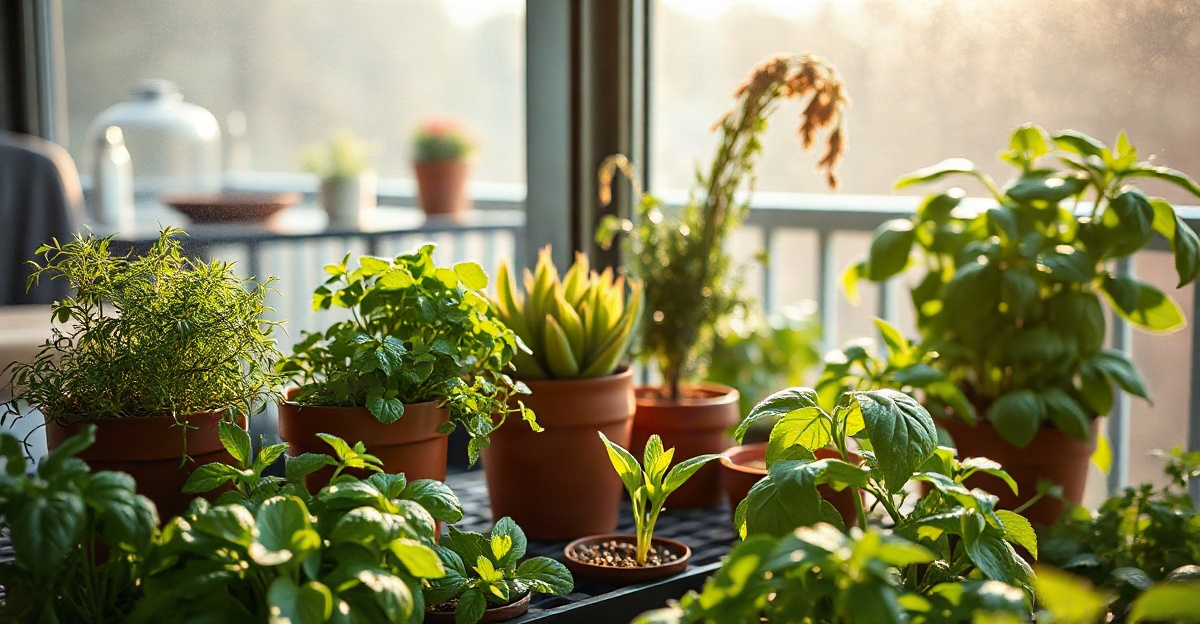
Most people kill their first balcony herb garden within three months. Not because they’re bad gardeners—but because they treat herbs like ornamental houseplants, not food crops that demand real sunlight, proper drainage, and seasonal rhythm. You can have basil, rosemary, mint, thyme, oregano, sage, chives, dill, parsley, cilantro, tarragon, marjoram, bay laurel, lemon verbena, and English lavender thriving year-round on a balcony as small as 6 by 8 feet. The trick isn’t magic. It’s understanding which herbs need how much sun, which ones overwinter outside, which ones you need to cut ruthlessly to keep alive, and why a 1-gallon pot will kill your rosemary faster than forgetting it for two weeks.
15 min read
In This Article
- Why Potted Herbs Fail (And How to Fix It)
- Pot Size and Soil: The Foundation Nobody Gets Right
- Sun, Aspect, and the Herbs You Can Actually Grow
- The 15 Herbs: Needs, Harvest Rates, and Overwintering
- Watering, Feeding, and the Weekly Rhythm
- Harvesting: The Aggressive Approach
- Overwintering: Which Herbs Stay Outside, Which Come In
- Common Problems and Fixes
- The Quick-Reference Pot and Sun Guide
Key Takeaways
- Why Potted Herbs Fail (And How to Fix It)
- Pot Size and Soil: The Foundation Nobody Gets Right
- Sun, Aspect, and the Herbs You Can Actually Grow
- The 15 Herbs: Needs, Harvest Rates, and Overwintering
Why Potted Herbs Fail (And How to Fix It)
The single biggest killer of balcony herbs is underwatering combined with poor drainage. Herbs in pots don’t have deep soil to tap into during dry spells—if your mix drains fast and you skip a day or two in summer heat, the plant dries out completely and dies. But the flip side is just as deadly: waterlogged soil, which rots the roots within days. Most people buy standard potting soil from the garden centre, which holds moisture like clay and kills drainage-loving Mediterranean herbs like rosemary and thyme.
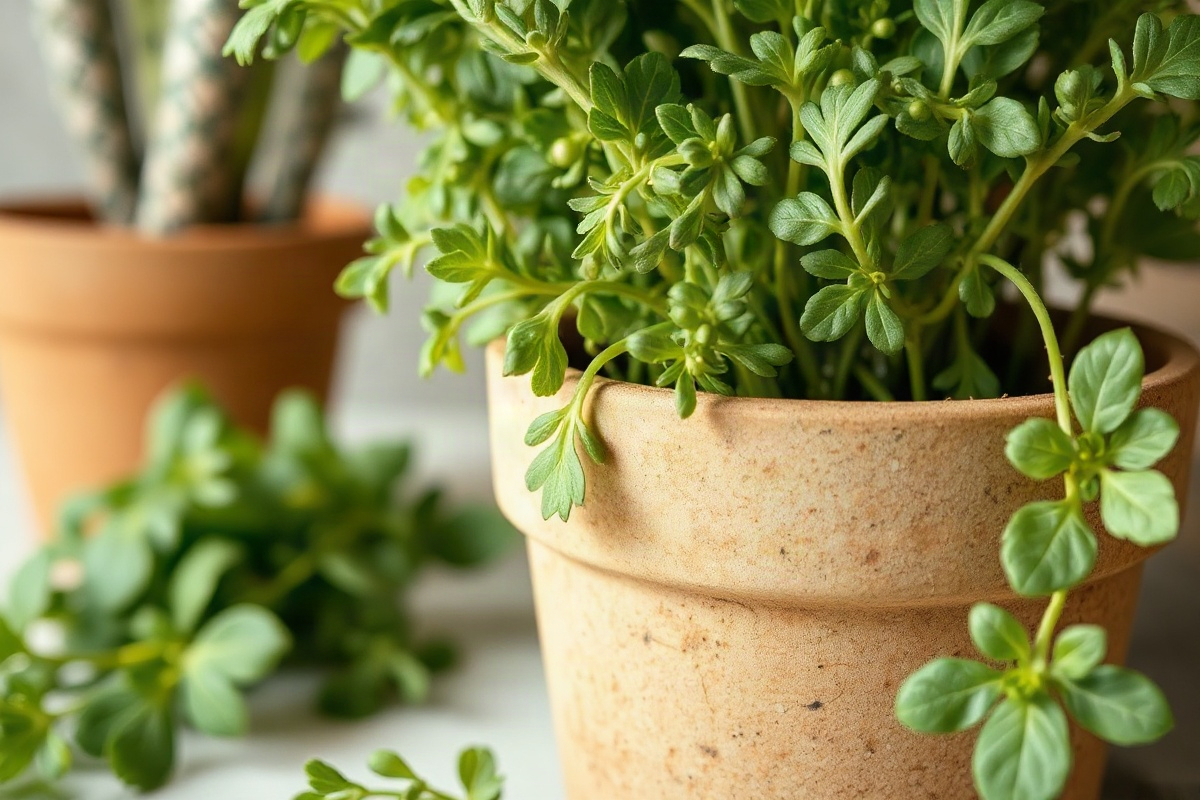
The second killer is insufficient light. Basil, parsley, and cilantro are sun-hogs. They need at least 6-8 hours of direct sunlight daily. If your balcony faces north or gets only 3-4 hours of dappled shade, these herbs will stretch, weaken, and taste bland. Similarly, most people don’t harvest enough—they let the plant get tall and leggy instead of pinching it back to force it bushy. Your basil actually wants you to strip off the top leaves; that’s not damage, it’s the whole point. Without aggressive harvesting, herbs become woody, stop producing new leaves, and stop tasting fresh.
Without aggressive harvesting, herbs become woody, stop producing new leaves, and stop tasting fresh.
Pot Size and Soil: The Foundation Nobody Gets Right
Buy the smallest pot that feels stingy, then go one size bigger. That’s the rule. A 3-litre (about 0.8 gallons) pot works for most herbs—mint, chives, parsley, cilantro, dill, lemon verbena, and tarragon. Rosemary, bay laurel, sage, and lavender need at least 5 litres (1.3 gallons) because they’re woody-stemmed perennials that expect deeper root run. Basil is weird: it’ll grow fine in 2 litres (0.5 gallons) but produces more leaves faster in a 3-litre pot with aggressive watering. The pot must have drainage holes—no exceptions. If it doesn’t, drill them yourself or move on.
Standard multi-purpose potting compost is too dense for herbs. It holds moisture like a sponge, and Mediterranean herbs will rot. Instead, make your own mix: 40% potting compost, 30% perlite or horticultural grit, and 30% coconut coir (or peat if you can’t find coir). This ratio drains fast but still holds enough moisture for daily watering. Coir and peat are lighter than soil and reduce balcony load—important if you’re stacking multiple pots on a rented balcony. A 5-litre pot of homemade mix weighs roughly 1.5 kg when moist, versus 2.5 kg for peat-heavy commercial mixes. You can buy pre-made cactus or orchid bark mixes as a shortcut, but they’re often 40–50% more expensive per litre than making your own.
Top-dress pots with 1 cm of coarse sand or grit after planting. This helps water drain around the crown of the plant and reduces fungal issues in humid climates. It’s cheap (£2 for 10 kg) and makes a visible difference with susceptible herbs like lavender and thyme.
It’s cheap (£2 for 10 kg) and makes a visible difference with susceptible herbs like lavender and thyme.
Sun, Aspect, and the Herbs You Can Actually Grow
Your balcony’s direction matters enormously. South-facing balconies get 8-10 hours of direct sun and run hot—perfect for Mediterranean herbs (rosemary, thyme, oregano, marjoram, lavender, sage, bay laurel) and sun-hungry annuals (basil, dill, cilantro). East and west-facing balconies get 4-6 hours of sun and midday shade; they’re fine for basil, parsley, chives, and mint, but rosemary and lavender will sulk. North-facing balconies get 2-4 hours of sun—forget Mediterranean herbs entirely. Focus on mint, chives, parsley, lemon verbena (which tolerates shade better than you’d think), and English tarragon.
Don’t rely on reflective surfaces or hope. “Balcony light” isn’t enough. If you can’t comfortably read a newspaper on your balcony at 10 a.m. in June without squinting, your herbs won’t get enough light. Some balconies are shadowed by a taller building next door or the structure above. Take a phone photo facing your balcony from outside—if it looks grey and dim, you’ve got a shade balcony, and you’ll need to accept that your rosemary will be weak and that cilantro will bolt (flower) within 4-6 weeks instead of 10-12.
Wind exposure is the silent saboteur. Balconies in exposed positions (high up, or facing prevailing winds) dry pots out twice as fast as ground-level gardens. If your balcony gets battered by wind, use heavier pots to prevent tipping, stake taller herbs like dill and lemon verbena, and water more frequently in summer. A windscreen cloth rated for 50% shade can reduce water loss and wind stress without cutting sun too much.
Tall, leggy, weak growth: Insufficient light (move the pot south or remove obstacles), or inadequate harvesting (start pinching the tops aggressively). Both kill herb productivity.
Tall, leggy, weak growth: Insufficient light (move the pot south or remove obstacles), or inadequate harvesting (start pinching the tops aggressively).
The 15 Herbs: Needs, Harvest Rates, and Overwintering
Not all herbs are created equal. Some are annuals that die after one season; others are perennials that live for years. Some grow insanely fast and need weekly harvesting; others produce slowly. Some tolerate frost; others must come indoors or die. Here’s the real breakdown.
Basil (Ocimum basilicum)
Basil is the fast food of herbs. Plant it in spring, pinch the top off when it’s 15 cm tall (not later), and harvest the outer leaves weekly. It’ll produce new leaves constantly until frost. A single 3-litre pot yields 40-60 grams of fresh leaves per week in peak season. It’s an annual, so it dies when temperatures drop below 10°C. Don’t try to overwinter it—it won’t. Sow fresh seed every 6 weeks if you want continuous supply. Basil hates wet feet but needs consistent moisture; let the top 1 cm of soil dry between waterings, then water thoroughly. Thai basil is hardier and slightly more productive than Italian sweet basil, but Italian basil tastes better in Western cuisine. One 3-litre pot costs £3–£5 at the garden centre; a seed packet (50+ seeds) costs £1.50, and you’ll get 3-4 successive crops from one packet if you resow.
Parsley (Petroselinum crispum)
Parsley is slow to start—it takes 3-4 weeks to germinate and 8-10 weeks to reach harvestable size from seed. Most people buy small plants instead, which saves time. Flat-leaf (Italian) parsley is more flavourful than curly and tolerates shade better. A 3-litre pot yields about 30 grams per week in summer. Parsley is a biennial, so in year one it produces leaves, and in year two it flowers and stops producing—then dies. Treat it as an annual. It tolerates cooler temperatures (down to 5°C) and can overwinter on a sheltered balcony if you move it against a south-facing wall. It prefers consistent moisture, so water every 1-2 days in summer. Harvest from the outer stems first, working inward. A small transplant costs £1–£2; seed costs £1.
Cilantro (Coriandrum sativum)
Cilantro grows fast and bolts faster—it flowers and stops producing within 6-10 weeks of sowing. This isn’t a flaw; it’s the plant’s job. Don’t fight it. Instead, sow seed every 3-4 weeks from early spring through to late summer to maintain supply. A 3-litre pot gives 20-30 grams per week before bolting. Plant it in cool conditions (spring or autumn); it hates heat and will bolt within 3 weeks if temperatures exceed 22°C. On a south-facing summer balcony, grow it in spring and autumn only. It needs 5-6 hours of sun. Cilantro doesn’t transplant well (it has a taproot), so sow directly into pots. Seed costs £1 per packet (100+ seeds).
Dill (Anethum graveolens)
Dill grows tall (60-90 cm) and needs staking on a windy balcony. Sow seed directly in spring; it germinate in 7-10 days. Harvest the feathery leaves from the top weekly, and it’ll keep producing branches. If you let it flower (which takes 4-5 weeks), you’ll get dill seed as a bonus for pickling. A 3-litre pot is the minimum; ideally use a 5-litre pot to support the height. It needs 6-8 hours of sun. One sowing lasts 10-12 weeks. Dill is an annual; sow fresh seed every 6 weeks for continuous supply. Seed costs £1–£1.50.
Mint (Mentha spp.)
Mint is a perennial that spreads aggressively via underground runners. Never plant it in open balcony soil or it’ll escape. Always pot it. It grows in shade (3-4 hours of sun) and wet soil without complaint. Keep it moist; mint actually tolerates waterlogging better than most herbs. Harvest the top 5 cm of stems every 1-2 weeks. A 3-litre pot produces 30-40 grams per week. Peppermint is more minty than spearmint; chocolate mint and apple mint are flavour variants that grow identically. Mint overwinters outdoors in mild zones (frost to -5°C) but needs frost protection (moving it against a wall or wrapping the pot) in harsher climates. In very cold zones, move it indoors to a cool windowsill for winter. It’ll go dormant and lose leaves but will regrow in spring. A small mint plant costs £2–£3.
Chives (Allium schoenoprasum)
Chives are a perennial bulb crop. Plant one crown (the bulb cluster) in a 2-litre pot or clump three crowns in a 3-litre pot. They shoot within 1-2 weeks, and you can harvest the grass-like leaves within 3-4 weeks. Pinch leaves from the outside and leave the inner growth undisturbed. A 3-litre pot yields 20-30 grams per week. Chives tolerate shade (4 hours of sun) and are tough as nails. They’ll flower in late spring (purple or pink flowers are edible), then stop producing for 2-3 weeks while the plant refocuses. After flowering, cut the plant hard (down to 5 cm) and it’ll regrow and produce again. Chives overwinter outdoors—they actually need a frost period. In winter they’ll die back above ground but return in spring. A small plant costs £1.50–£2.50.
Thyme (Thymus spp.)
Thyme is a woody perennial that lives 3-5 years in a pot. It’s drought-tolerant once established, so water only when the top 2 cm of soil dries out. It needs full sun (6-8 hours daily) and very well-draining soil. Use the perlite-heavy mix mentioned earlier. A 3-litre pot yields 15-20 grams per week in peak season. Common thyme is hardiest; lemon thyme and other flavour varieties are slightly less cold-hardy but grow identically. Harvest the top 5 cm of stems; don’t strip the woody base. Thyme flowers in late spring (small pink or white blooms) and can be harvested for tea. It overwinters outdoors down to -10°C or lower; no special protection needed. A small plant costs £2–£3.
Rosemary (Rosmarinus officinalis)
Rosemary is the commitment herb—it lives 10+ years and only gets better. It’s slow-growing (a 5-litre pot reaches mature size in 2-3 years) and doesn’t need frequent harvesting to stay healthy. Harvest 5-10 cm tips as needed. A 5-litre pot produces 20-30 grams per week once established. Rosemary must have full sun (8+ hours daily) and the fast-draining mix. Overwatering is the main killer. Water only when the top 2-3 cm of soil is dry; in winter, water even less. It tolerates frost down to -10°C and overwinters outdoors with no protection on most balconies. However, cold, wet, and windy conditions together (exposed north-facing balcony in December) can kill it—move it to a sheltered spot. Upright varieties (Tuscan, Fastigiata) suit pots better than spreading types. A small upright rosemary plant costs £4–£7.
Sage (Salvia officinalis)
Sage is another woody perennial, similar to thyme but larger. A 5-litre pot is the minimum. It lives 4-6 years. Sage needs full sun and fast drainage. It’s drought-tolerant once established. Harvest the outer stems; don’t strip the woody core. A 5-litre pot yields 20-25 grams per week. Purple sage and gold sage are ornamental variants that taste the same and grow identically. Sage flowers in early summer (purple or pink spikes), and the flowers are edible for tea. It overwinters outdoors down to -5°C in most zones; in harsher areas, move it to a sheltered spot. Overwatering in winter is the main winter killer. A small sage plant costs £2.50–£4.
Oregano and Marjoram (Origanum spp.)
These are perennials that behave almost identically. Greek oregano is more flavourful than Italian; marjoram is milder. Both grow in a 3-litre pot, need full sun, tolerate drought, and produce 20-30 grams per week. Harvest the top 5 cm of stems weekly; they respond well to aggressive cutting. They flower in midsummer (pink or white), and the flowers are edible. They overwinter outdoors down to -10°C with no protection. A small plant costs £2–£3.
Lemon Verbena (Aloysia citrodora)
Lemon verbena is a tender perennial that grows tall (60-90 cm), so stake it. A 5-litre pot is ideal. It tolerates shade better than most herbs (4-5 hours of sun) and has a strong lemon flavour. Harvest the top 5 cm of stems; it responds well to hard pruning. A 5-litre pot yields 30-40 grams per week in peak season. It’s frost-tender—temperatures below 5°C damage it. In autumn, move it indoors before the first frost (mid-to-late October in most of the UK). Keep it on a sunny windowsill indoors, in a cool room (10-15°C). It’ll drop leaves and slow down but won’t die. In spring, move it back outdoors after the last frost. A small plant costs £3–£5.
Tarragon, English (Artemisia dracunculus ‘Sativa’)
English tarragon (also called French tarragon) is a delicate perennial with a subtle anise flavour. It’s less hardy than French tarragon but far more flavourful—don’t buy Russian tarragon, which tastes like nothing. A 3-litre pot works. It needs 4-5 hours of sun and tolerates part-shade. Harvest the top 5 cm; it’s slower to regrow than other herbs, so don’t overstrip. A 3-litre pot yields 15-20 grams per week. It’s mildly frost-hardy (down to -5°C) but prefers a sheltered spot. In harsh winters, move it to a south-facing wall or indoors. In early spring, cut the plant hard (down to 5 cm) to force bushy new growth. A small plant costs £3–£4 and is harder to find than common herbs—order online if your local garden centre doesn’t stock it.
Bay Laurel (Laurus nobilis)
Bay laurel is a slow-growing woody perennial that can live 20+ years. A 5-litre pot is the starting size; it’ll need repotting every 2-3 years. It tolerates shade (4-5 hours of sun) and is drought-tolerant once established. Harvest individual leaves as needed; there’s no “weekly” harvest rhythm like other herbs. A mature plant (3-4 years old) yields 10-15 leaves per week. Bay is only mildly frost-hardy (hardy to about -5°C) and hates cold, wet winter conditions. On exposed balconies in harsh zones, move it indoors for winter to a cool, bright spot (a garage or conservatory is ideal). A small bay laurel plant costs £5–£8.
Lavender, English (Lavandula angustifolia)
Lavender is a long-lived woody perennial (8-10 years), but it’s finicky in pots. It needs full sun (8+ hours), fast drainage, and dry conditions. Overwatering kills it faster than frost. Use the perlite-heavy mix. A 5-litre pot is the minimum. Harvest the flower stems just as the florets open (mid-to-late June on most UK balconies). Dry flowers are more valuable than fresh; a 5-litre plant produces 40-60 grams of flowers per year. After flowering, shear the plant lightly to keep it bushy; don’t cut into bare wood. Lavender overwinters outdoors down to -10°C with no fuss. The killer is wet soil in winter combined with poor drainage. If your pot doesn’t have excellent drainage, lavender will rot. A small lavender plant costs £3–£5.
If your pot doesn’t have excellent drainage, lavender will rot.
Watering, Feeding, and the Weekly Rhythm
Potted herbs need consistent watering during the growing season (April to September in the UK). In hot, dry summers, daily watering is normal. The rule is: water when the top 1-2 cm of soil feels dry to the touch. Don’t water on a schedule—check the soil. In spring and autumn, every 2-3 days is typical. In winter, most herbs need little water; rosemary, thyme, sage, and lavender should dry out between waterings.
Feed herbs every 4 weeks during the growing season with a balanced liquid fertiliser (such as Tomato Tone or a general-purpose 7-7-7 NPK). Dilute to half the recommended strength to avoid burning the roots. Alternatively, top-dress each pot with 1 cm of compost in mid-April, mid-June, and mid-August—this works just as well and is cheaper. Mediterranean herbs (rosemary, thyme, lavender, sage) actually produce better flavour when fed sparingly; over-feeding makes them weak and soft. Basil, parsley, and cilantro are hungrier and benefit from monthly feeding.
Check for pests weekly, especially in late spring. Whitefly and spider mite love balcony herbs in warm, dry conditions. A strong spray of water from the hose usually dislodges them. If they persist, mix 1 tablespoon of insecticidal soap per litre of water and spray the undersides of leaves. Never spray in direct sun; do it in the evening. Fungal issues (powdery mildew, grey mould) appear in humid conditions or when foliage stays wet. Improve air circulation by spacing pots 10-15 cm apart, never water the leaves (water the soil only), and prune to open up the plant’s centre.
Improve air circulation by spacing pots 10-15 cm apart, never water the leaves (water the soil only), and prune to open up the plant’s centre.
Harvesting: The Aggressive Approach
Most people harvest herbs too gently and too rarely. They pinch a few leaves and call it a day. Then they wonder why their basil gets woody and stops producing. Here’s the reality: frequent, aggressive harvesting keeps herbs soft, productive, and flavourful. Gentle, infrequent harvesting stresses the plant and slows growth.
For soft-stemmed herbs (basil, parsley, cilantro, dill, mint, chives, lemon verbena), harvest by pinching off or cutting the top 5 cm of the stem. Always harvest from the outside working inward, or from the top working downward. This forces the plant to branch and produce more leaves. Once the plant is 15 cm tall, you can harvest 30-40% of its leaves every 1-2 weeks without harming it. If you harvest less than 20% per week, the plant gets leggy and unproductive.
For woody-stemmed herbs (thyme, rosemary, sage, oregano, lavender, bay laurel), harvest 5-10 cm of the new soft growth at the tips. Never strip more than the top 1/3 of the plant in a single harvest. These plants regrow more slowly than soft herbs, so spacing harvests 2-3 weeks apart is fine. If you’re ruthless enough to harvest 50% in one go, give the plant 4-6 weeks to recover before the next heavy harvest.
Always harvest in the morning after the dew dries but before the plant is stressed by midday heat. Herbs taste better, and morning-harvested leaves store longer. Use clean scissors or secateurs, not your fingers—it’s faster and cleaner for the plant.
Overwintering: Which Herbs Stay Outside, Which Come In
UK winters are mild enough to leave most hardy herbs on your balcony. The issue is wind exposure and waterlogging combined with cold, not cold alone. A south-facing balcony with shelter overwinters everything except lemon verbena and tender basil. A north-facing, wind-battered balcony will kill tender perennials.
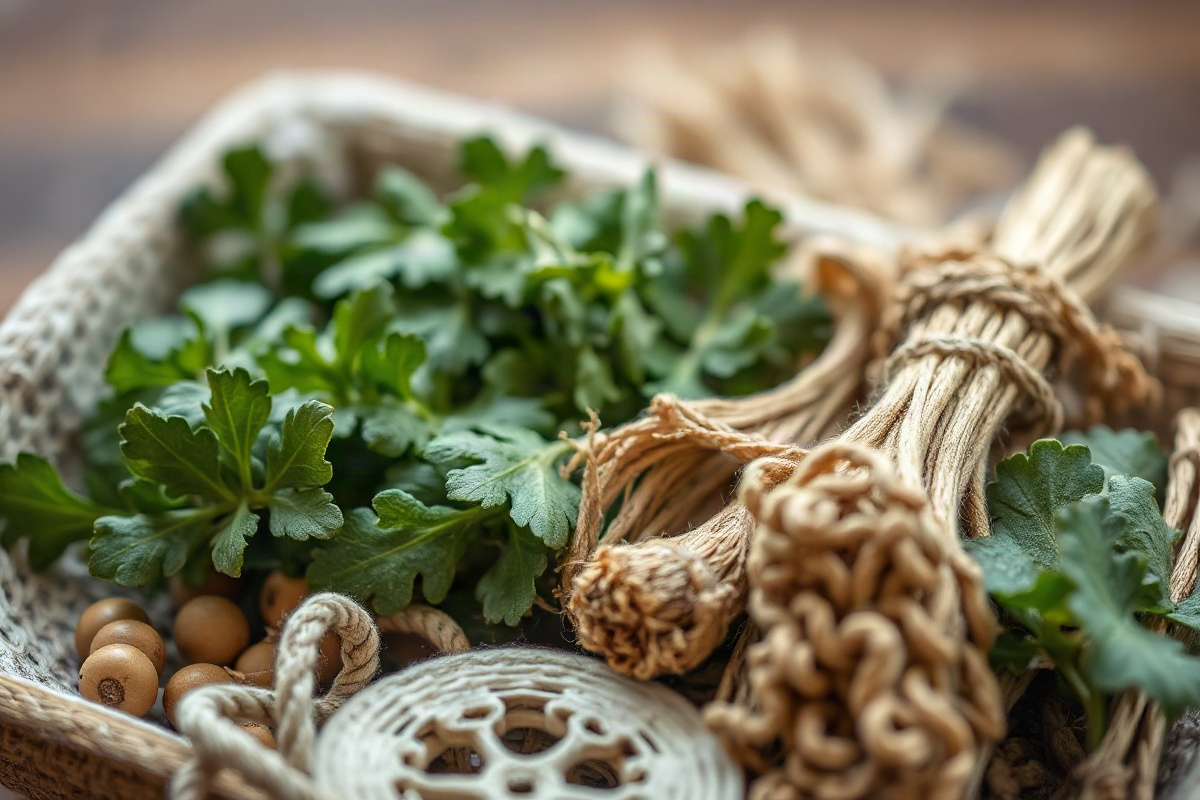
Hardy herbs that survive outdoors on most UK balconies (down to -10°C): rosemary, thyme, sage, oregano, marjoram, chives, parsley (if sheltered), and lavender. These need almost no water in winter—roots still need to breathe, so let the soil dry out between rare waterings. If snow piles up on the pots, brush it off to prevent fungal issues.
Semi-hardy herbs that need shelter: mint (protect the crown with a mulch of straw or fleece), English tarragon (move to a south-facing wall or indoors), and bay laurel (move indoors in harsh zones or to a sheltered spot). In the South of England, these survive outdoors with a bit of care. In Scotland, move them indoors.
Tender herbs that must come indoors before the first frost (usually mid-October): lemon verbena, basil, and cilantro. Move them to a cool, bright windowsill indoors (10-15°C is ideal, not a warm sitting room). They’ll drop leaves and slow down but won’t die. Basil and cilantro are annuals, so don’t bother keeping them—just compost them and resow in spring. Lemon verbena, however, will regrow in spring and can live for years if kept frost-free.
In early spring (late February to mid-March), prune hardy herbs hard to force new soft growth. Cut rosemary, sage, thyme, and oregano back by 1/3. This removes old, woody growth and encourages bushiness. Don’t prune lavender until after flowering (early July); then shear lightly.
Common Problems and Fixes
Yellow leaves and slow growth: Usually poor drainage, overwatering, or insufficient light. Check that your pot has drainage holes and the soil is fast-draining. Move the pot to sunnier spot. For Mediterranean herbs, reduce watering frequency.
Tall, leggy, weak growth: Insufficient light (move the pot south or remove obstacles), or inadequate harvesting (start pinching the tops aggressively). Both kill herb productivity.
Leaves dropping in late autumn: Normal for lemon verbena and some tender herbs. Move them indoors. For hardy herbs, it’s usually overwatering or cold, wet feet. Reduce watering; improve drainage.
Powdery mildew (white powder on leaves): Occurs in humid, poorly ventilated conditions. Space pots farther apart. Prune to improve airflow. Never water the foliage. If severe, spray with baking soda solution (1 tablespoon baking soda + 1 litre water + a few drops of dish soap), repeat every 7 days.
Whitefly or spider mites: More common in warm, dry summers. Spray leaves with a hard stream of water. If persistent, use insecticidal soap (follow the label). Spray in the evening, not midday sun.
The Quick-Reference Pot and Sun Guide
| Herb | Min. Pot Size | Sun Hours | Overwintering | Yield (grams/week) |
|---|---|---|---|---|
| Basil | 3L | 6–8 | Indoors / annual | 40–60 |
| Parsley | 3L | 5–6 | Outdoors (sheltered) | 30–35 |
| Cilantro | 3L | 5–6 | Indoors / annual | 20–30 |
| Dill | 5L | 6–8 | Annual | 25–35 |
| Mint | 3L | 3–6 | Outdoors (protected) | 30–40 |
| Chives | 3L | 4–6 | Outdoors | 20–30 |
| Thyme | 3L | 6–8 | Outdoors | 15–20 |
|
Small changes, real momentum Get practical guides and templates you’ll actually use — a few thoughtful emails a month.
Why do so many balcony herb gardens die within a few months?The main killers are treating herbs like houseplants. They typically fail from insufficient sunlight, combined with improper watering—either underwatering in fast-draining soil or overwatering that causes root rot. Using standard, moisture-retentive potting soil for herbs that need excellent drainage is another common mistake. What is the most critical mistake people make with pot size and soil?Using pots that are too small or the wrong soil mix. Mediterranean herbs like rosemary need room for roots and superb drainage. A 1-gallon pot can restrict growth and dry out too quickly. Avoid standard potting soil; instead, use a gritty, well-draining mix tailored for herbs or vegetables. Which herbs are best for a sunny balcony?Sun-loving herbs that thrive with 6+ hours of direct light include basil, rosemary, thyme, oregano, sage, and lavender. These Mediterranean varieties need ample sunlight to produce robust flavor and grow vigorously. They are ideal for south or west-facing balconies. Can I leave my potted herbs outside over winter?It depends on the herb and your climate. Hardy perennials like thyme, sage, and oregano can often overwinter outside. Tender herbs like basil and rosemary must typically be brought indoors before frost. Always check each herb’s specific hardiness and your local frost dates. Grow Something GoodSeasonal how-tos and sustainable gardening you can actually use. |